


Canine Parvovirus (Parvo): Prevention, Risk, and What Every Puppy Owner Must Know
Parvo is one of the most dangerous and misunderstood puppy illnesses. It is highly contagious, environmentally persistent, and emotionally devastating. This page exists to educate puppy owners, explain prevention strategies, and clearly outline expectations—especially in high-risk parvo regions.
Our area, here in Idaho is a very high risk area.

What Is Canine Parvovirus (Parvo)?
All puppies leave our care with:
A veterinary examination
Normal stool at time of departure
Strict, routine deworming protocols
Vaccinations appropriate for age
Full documentation of care
Canine Parvovirus (CPV) is a highly contagious viral disease that primarily affects puppies and unvaccinated dogs. It attacks the intestinal tract and immune system and can progress rapidly without immediate veterinary care.
Most common in puppies under 6 months
Can affect adult dogs with inadequate vaccination
Often requires hospitalization and intensive treatment
“Because Parvo risk varies by region, prevention protocols play a critical role in keeping puppies healthy.” → link below
Why Parvo Is So Dangerous
Parvo is dangerous not just because of the illness itself, but because of how easily it spreads and how long it survives in the environment.
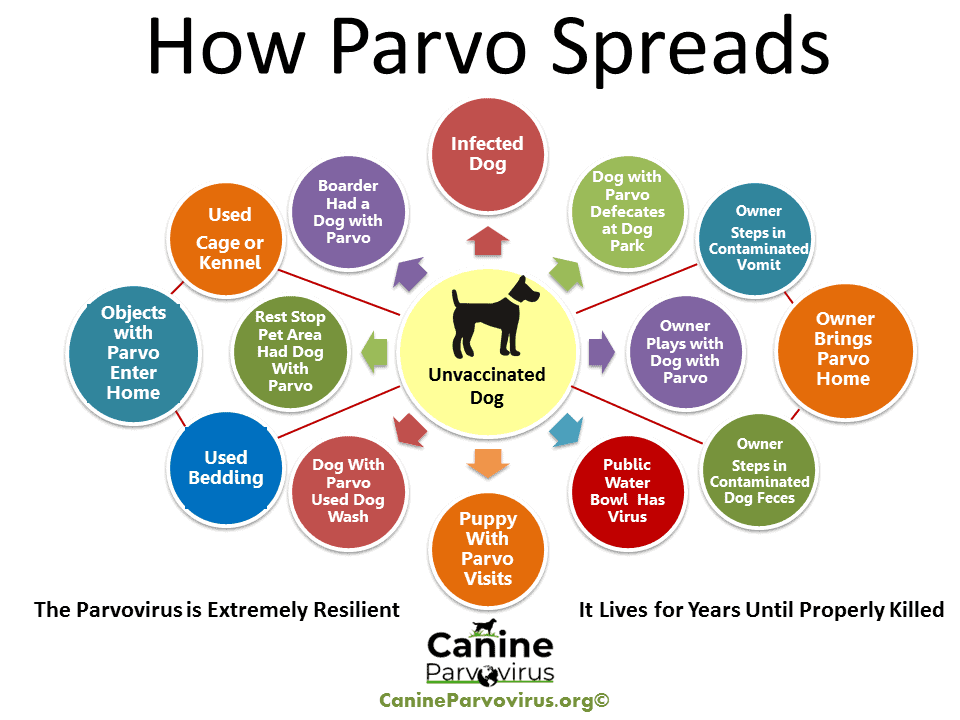
Parvo spreads through microscopic particles of infected feces. These particles are invisible and easily transported.

You do not need to take your puppy “anywhere” for parvo exposure to occur. It can be brought home unknowingly.
How Parvo Spreads (This Is Where Most Exposure Happens)
Common Parvo Exposure Sources
Shoes and clothing
Hands and skin
Floors and carpets
Grass and soil
Sidewalks and parking lots
Pet stores and vet clinic exteriors
Apartment complexes
Friends’ homes
Shared water bowls
Shopping carts
Grooming salons
Dog parks (highest risk.
Lives in soil and on surfaces for 6–12 months or longer
Not killed by freezing temperatures
Not eliminated by most household cleaners
Can cause rapid decline within hours
Mortality rates increase without early intervention
No public ground
No sidewalks or parking lots
No pet store floors
No dog parks
No shared outdoor spaces with unknown dogs
Until a puppy is fully vaccinated, their immune system is incomplete. “All paws off the floor” is a prevention strategy designed to reduce unnecessary risk during this vulnerable stage.
All Paws Off the Floor” — A Critical Prevention Rule
Safe Alternatives
Carrying your puppy
Puppy strollers
Clean blankets or towels
Controlled indoor environments
Limited interaction with known, vaccinated dogs only
Parvo Risk Is Regional (And Some Areas Are High Risk)Puppy strollers
Parvo risk varies by region. High-risk areas often have dense dog populations, mild winters, high stray populations, or frequent dog traffic. In these regions, early and intentional prevention is essential.
Our Preventative Approach: Early, Veterinary-Guided Protection
Because we operate in a very high-risk parvo area, we follow a proactive, science-based prevention protocol.
Early Neopar Vaccination
We begin Neopar vaccination at 4 weeks of age
Administered according to manufacturer guidelines
Designed to provide early immunity support while maternal antibodies are still present
Especially important in high-risk regions
Vaccines are ordered through Revival Animal Health and implemented in collaboration with veterinary guidance and manufacturer recommendations.
Important Vaccine Reality (This Is Not Optional Knowledge)
Vaccines are layers of protection—not instant immunity.
What Happens After Go-Home (Owner Responsibility)
Vaccines do not provide immediate protection
No vaccine is 100% effective
Puppies remain vulnerable until the full vaccine series is completed
Environmental control is just as important as vaccination
What Vaccines Can and Cannot Do
Vaccines do not provide immediate protection
No vaccine is 100% effective
Puppies remain vulnerable until the full vaccine series is completed
Environmental control is just as important as vaccination
What We Do Before Puppies Go Home
Our program includes multiple layers of prevention before a puppy ever leaves our care.
Our Standards Include
Early parvo vaccination protocols
Strict sanitation practices
Controlled exposure environments
Ongoing health monitoring
Education provided to puppy ownersNo vaccine is 100% effective
Puppy Owner Responsibilities
Follow “all paws off the floor” guidelines
Avoid unnecessary exposure
Complete vaccines on schedule
Understand parvo risk is environmental
Seek immediate veterinary care if symptoms appear
Once a puppy leaves our care, environmental exposure is no longer within our control.
Early Signs of Parvo to Watch For
Common Early Symptoms
Lethargy
Loss of appetite
Vomiting
Diarrhea (especially foul-smelling or bloody)
Fever
Parvo Is Not a Failure — It’s a Known Risk
Even with responsible breeding, early vaccines, clean environments, and educated owners, parvo can still occur. This does not automatically indicate negligence or failure. It reflects the aggressive nature of the virus and the vulnerability of developing immune systems.
Parvo progresses quickly. Early action saves lives.
If you suspect parvo, do not wait. Immediate veterinary care is critical.
FAQ
-
Parvo is a highly contagious and potentially fatal virus that attacks a puppy’s intestinal tract and immune system. It spreads easily, survives in the environment for long periods, and most commonly affects puppies under six months of age.
-
Parvo is spread through microscopic particles of infected feces. Puppies are exposed through shoes, floors, grass, hands, clothing, shared surfaces, and public spaces—even without direct contact with other dogs.
-
Yes. Parvo is widespread, especially in high-risk areas with dense dog populations or mild climates. It is not rare, seasonal, or limited to irresponsible ownership.
-
Yes. Parvo can survive in soil and on surfaces for 6–12 months or longer. Freezing temperatures do not kill it, and many household cleaners are ineffective.
-
It means keeping puppies off public ground and shared surfaces until they are fully vaccinated. No sidewalks, pet store floors, dog parks, apartment grass, or vet parking lots. Carrying your puppy is the safest option.
-
Because parvo is invisible. You cannot see where infected particles are, and “clean-looking” areas can still carry high viral loads. Avoiding exposure during early development is critical.
-
We begin Neopar vaccination at 4 weeks of age, following manufacturer guidelines, especially due to the high-risk parvo area we operate in.
-
No. Vaccines provide layers of protection over time. Puppies are still vulnerable until their full vaccine series is completed, which is why exposure control is just as important as vaccination.
-
Yes. While vaccines significantly reduce risk, no vaccine offers 100% protection—especially in high-risk environments or with early exposure.
-
Early symptoms may include lethargy, loss of appetite, vomiting, diarrhea (often foul-smelling or bloody), and fever. Parvo progresses quickly—early treatment saves lives.
-
Seek veterinary care immediately. Do not wait to “see if it improves.” Parvo is a medical emergency, and rapid treatment greatly improves survival rates.
-
No. Parvo is an environmental virus. Even well-bred, healthy puppies can contract it if exposed before full immunity develops. Prevention and education are the best defenses
-
Once your puppy has completed their full core vaccine series and your veterinarian confirms adequate immunity. Until then, limiting exposure is the safest and most responsible choice.
-
Yes—veterinary care is essential. Carry your puppy in and out, avoid placing them on clinic floors, and ask staff for guidance. Most clinics understand parvo risk and will help minimize exposure.
Parvo is ruthless. Puppies are fragile. Education and prevention save lives.
Carry your puppy
Control the environment
Follow vaccine schedules
Reduce exposure
Act fast
Raising puppies comes with real-world biology. When expectations are clear and education is shared, puppies and families thrive.
The information on this page is provided to educate puppy buyers and set clear expectations regarding common intestinal parasites in puppies.
Acknowledgment of this information, including exposure risks, post–go-home flare-ups, and health guarantee limitations related to Giardia and Coccidia, is included in the final purchase contract.
Staying Connected

01. Follow Us on Instagram
We love seeing your doodles grow! Tag @BoiseDoodleCo_ranch and share your photos to be featured on our page.
02. Join our Newsletter
Each month we send litter updates, health tips, and seasonal training reminders straight to your inbox.
0.3 Podcast (Coming Soon!)
We’re launching a podcast just for doodle families — with real stories, breeder insights, and expert interviews. Sign up for our newsletter to get the first episode when it drops.

"Responsible Breeding Protects Generations."
We test today to improve the lines of tomorrow—this is breeding with purpose.

Sneak Peeks from Our Journal
Early Neurological Stimulation (ENS) for Puppies
Early Neurological Stimulation (ENS) is a proven method used by top breeders to give puppies a healthy head start in life. Performed between days 3–16, ENS includes five simple exercises — toe tickling, head up, head down, on back, and gentle cold touch — to boost brain development, strengthen the heart, improve stress tolerance, and support lifelong health.
From Our Journal: Life on the Farm
There’s nothing quite like mornings with our Goldendoodle puppies—sunrise, wagging tails, and coffee in hand. If you’re searching for Goldendoodle puppies for sale in Boise, Idaho or wondering if there are Goldendoodle puppies for sale near me, you’re in the right place. These pups are raised with love, structure, and a whole lot of heart.
Let’s be honest—dog hair on your black pants, your couch, your car, and (somehow) in your coffee? Not ideal. Whether you’re navigating allergies, asthma, or just really into clean furniture, finding a non-shedding dog breed can feel like searching for a unicorn. The good news? That unicorn exists… and it comes with a tail and a wagging butt.
At Boise Doodle Co., we specialize in ethically bred, low-to-non-shedding breeds that fit beautifully into family life—and don’t leave your house looking like a lint roller exploded. Let’s dig into your best options.
I Have Questions!
Have Questions, Concerns? Great! We love to chat. Please note if you are looking to fill out the puppy application or read the breeders contract click here.

Frequently Asked Questions
-
Yes. Every Boise Doodle puppy is introduced to a crate/kennel routine before going home. This makes crate training easier, helps with potty training (dogs don’t potty where they sleep), and provides your puppy a safe den space.
-
We recommend premium tools that match your doodle’s coat and lifestyle:
Pawtree Puppy Food (Turkey & Sweet Potato, White Fish & Brown Rice)
Chris Christensen Slicker & Pin Brushes
Cowboy Magic shampoo/conditioner
Puppy play pen, bully sticks, chew toys, collar, leash, bowls
Tip: We’ll send you a starter potty tray and first week of food with your placement.
-
We feed Pawtree premium food (Turkey & Sweet Potato; White Fish & Brown Rice). It’s made in the USA, reduces gas, improves digestion, and keeps ears healthy. Puppies are fed twice daily in our home, and we recommend you continue this diet to maintain our Boise Doodle Health Guarantee
-
All puppies are trained to understand nighttime is for rest, not play. We remove food after 6:00 pm and water after 7:00 pm, which helps with potty training. Puppies are crated with comfort items (blanket with mom’s scent) to reinforce calm, quiet nights.
-
Yes. Boise Doodle Company offers concierge delivery nationwide. Most families choose airport delivery for $850, which includes flight nanny services and a hand-off at your nearest major airport. We also offer ground delivery options in select regions. Every delivery is designed to be stress-free and safe for your puppy, ensuring a smooth transition into your home.
-
All Boise Doodle puppies are sold on a strict spay/neuter contract, unless full breeding rights are purchased separately. Each placement also comes with our health guarantee, supported by veterinary records and a 30-day free Trupanion insurance policy. These agreements protect both your new family member and the integrity of our breeding program, ensuring long-term health and wellbeing.
-
Good Dog is a trusted platform that provides an extra layer of security and financing options for buyers. Boise Doodle Company lists select litters on Good Dog, and families can check out through their platform using Klarna monthly payments. Please note: if your initial conversation and application begins on Good Dog, their rules require that we finish the purchase there. If you apply directly on our website, you’ll bypass Good Dog’s fees while still receiving the same Boise Doodle health guarantee.
-
To reserve your puppy, we require a $1,000 non-refundable deposit (or 50% if the puppy is under 8 weeks old). For puppies over 8 weeks, the full purchase price plus Idaho sales tax is due to secure your spot. Deposits can be paid via Stripe on our website or through Good Dog checkout if you’d like to use Klarna financing. Once reserved, your puppy is officially held for your family.

We’re here to help you take the next step with confidence.
Ethical, Health-Tested Puppies & Honest Guidance—Every Step of the Way
-
Ethical, intentional breeder (say it plainly)
Idaho-based, home-raised, family-run
Fully health-tested parents (name the tests once)
Not a puppy mill, not a broker, not a hobby gone sideways
-
Health testing first (not optional, not trendy)
Temperament + lifestyle matching
Structured puppy raising (ENS, ESI, Puppy Culture)
Transparency, education, and lifetime support
-
Families who value health and temperament
People who want education, not impulse buying
First-time dog owners who want support
Experienced owners who want quality over shortcuts
And yes — it’s okay if someone reads this and realizes,
“Hmm… maybe not us.”
That’s a win.
ethical dog breeder — health-tested puppies — responsible doodle breeder — puppy raising program — responsible poodle breeder — ofa testing — boise, idaho